An open-source skill pack: withsuper-analyst, that could learn a dataset and produce a rules playbook. super-optimizer, which tunes a playbook against historical data, and super-metatwin, which builds new agents for you. This page walks through what each one does and how they fit together.
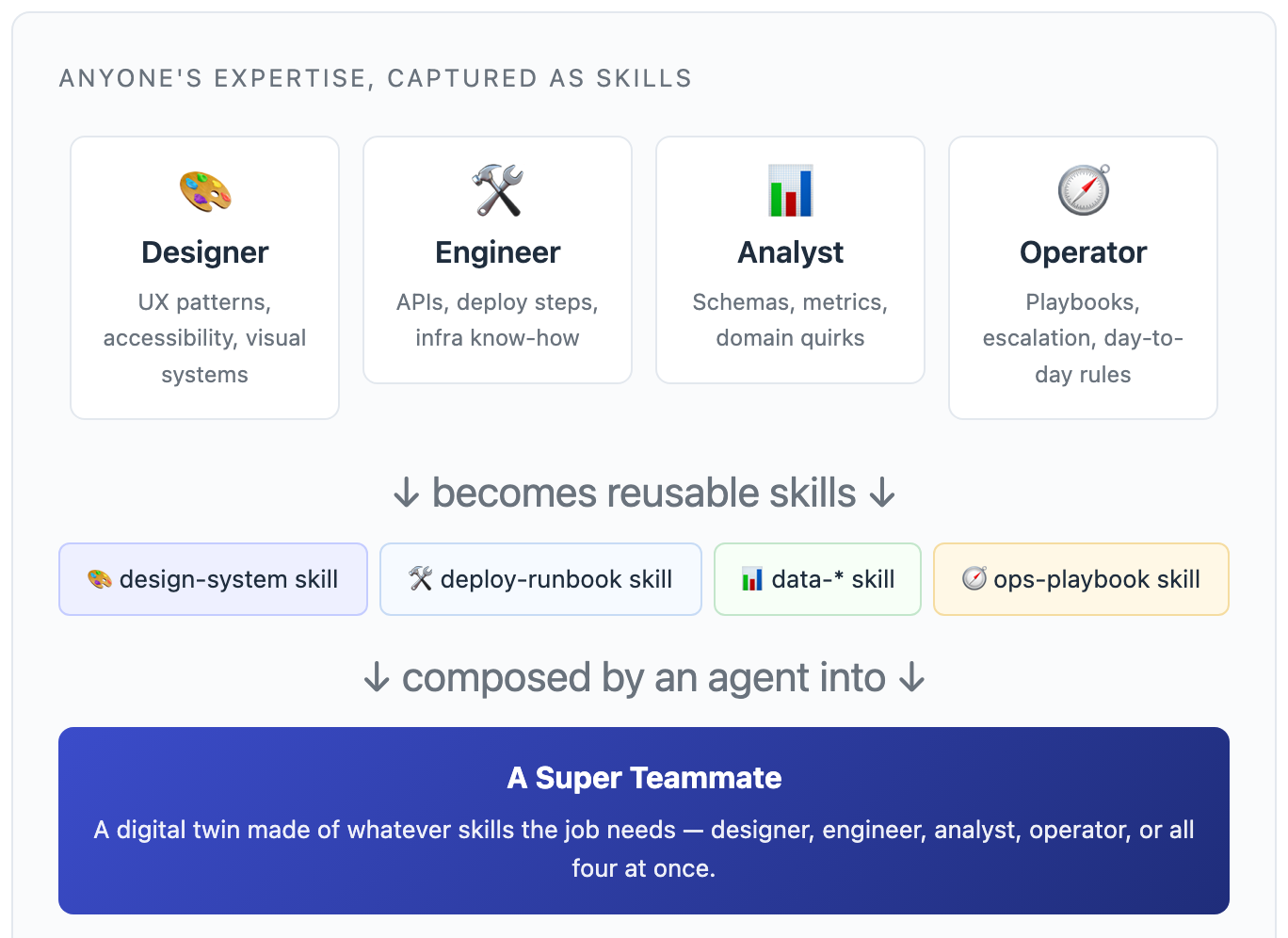
The underlying idea: any role’s expertise — designer, engineer, analyst, operator — can be written down as a small set of skills, and an agent can compose those skills on demand into a digital teammate that fits the job.
Today vs. Super Teammate
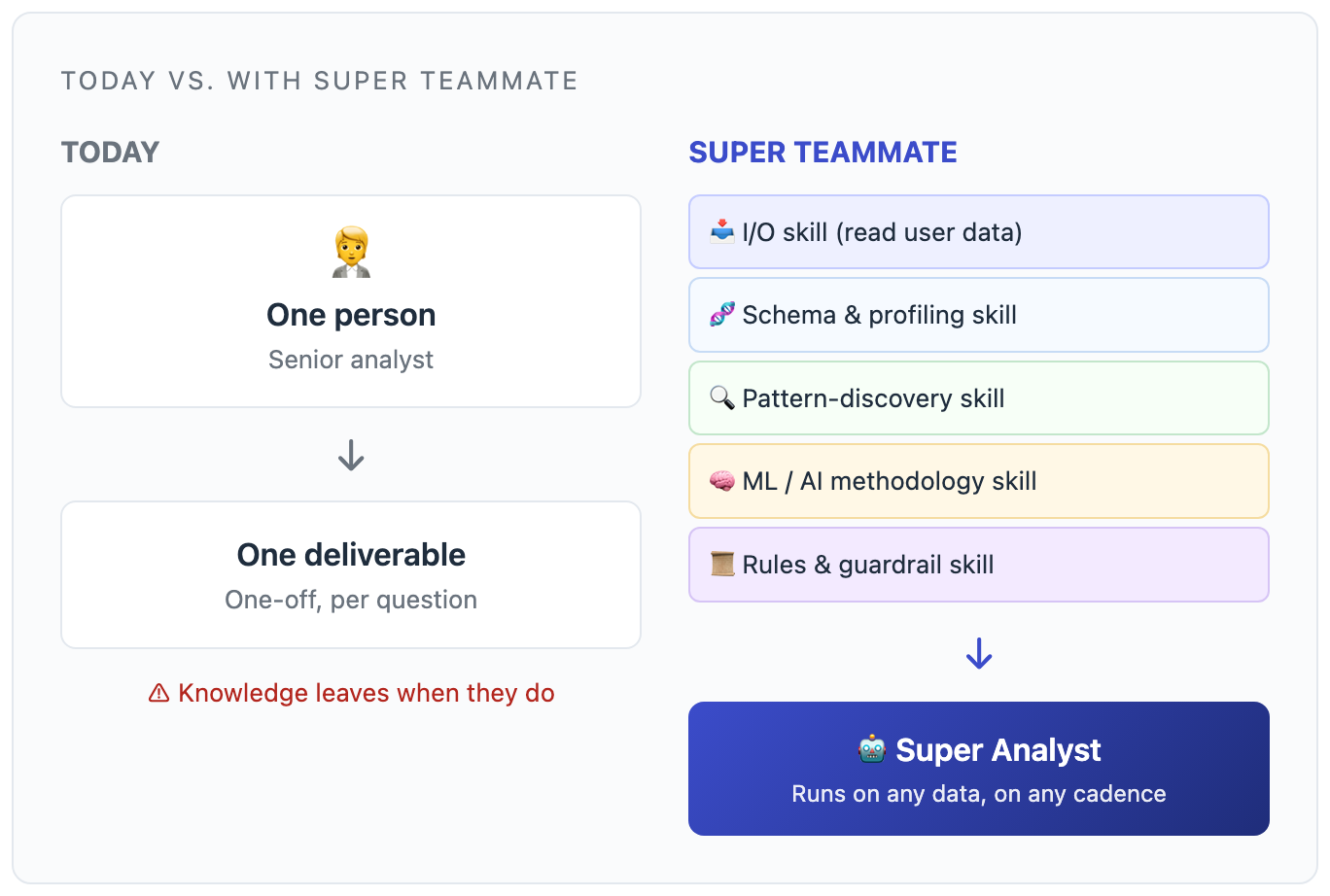
It’s easier to see the idea side by side. On the left is how a typical analysis project gets done today — one person, one role, one deliverable. On the right is the same work expressed as a stack of reusable skills that any one person can assemble into a digital teammate.
The people don’t go anywhere. Their expertise just becomes portable: the analyst’s instincts about a domain, the data engineer’s knowledge of a pipeline, the platform engineer’s deploy steps — each of those can be written down as a skill that other people (and other agents) can reuse later.
What’s actually in a skill
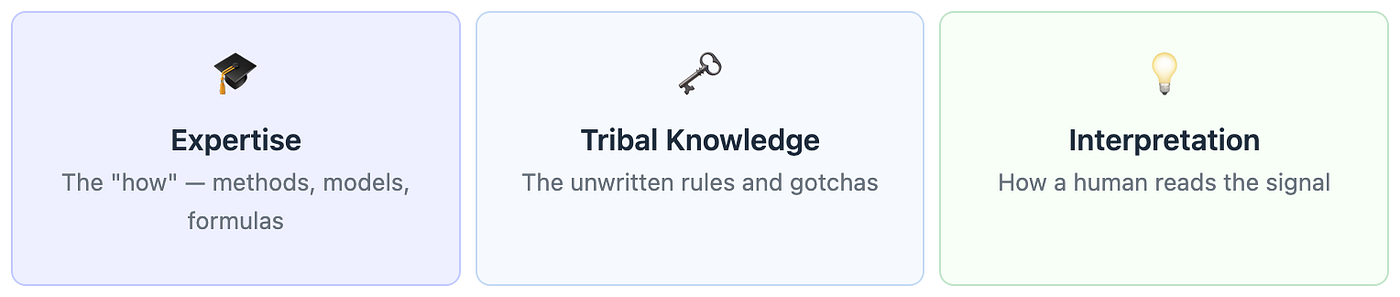
A skill in this framework isn’t a function call. It’s a small markdown file that captures a piece of expertise in a form an agent can read at runtime. There are usually three things inside it:
The seven skill families
Skills are grouped into seven families, each focused on a different step of an analysis workflow. They’re methodology references — they don’t carry any data of their own. The agent picks which ones to load based on the question.
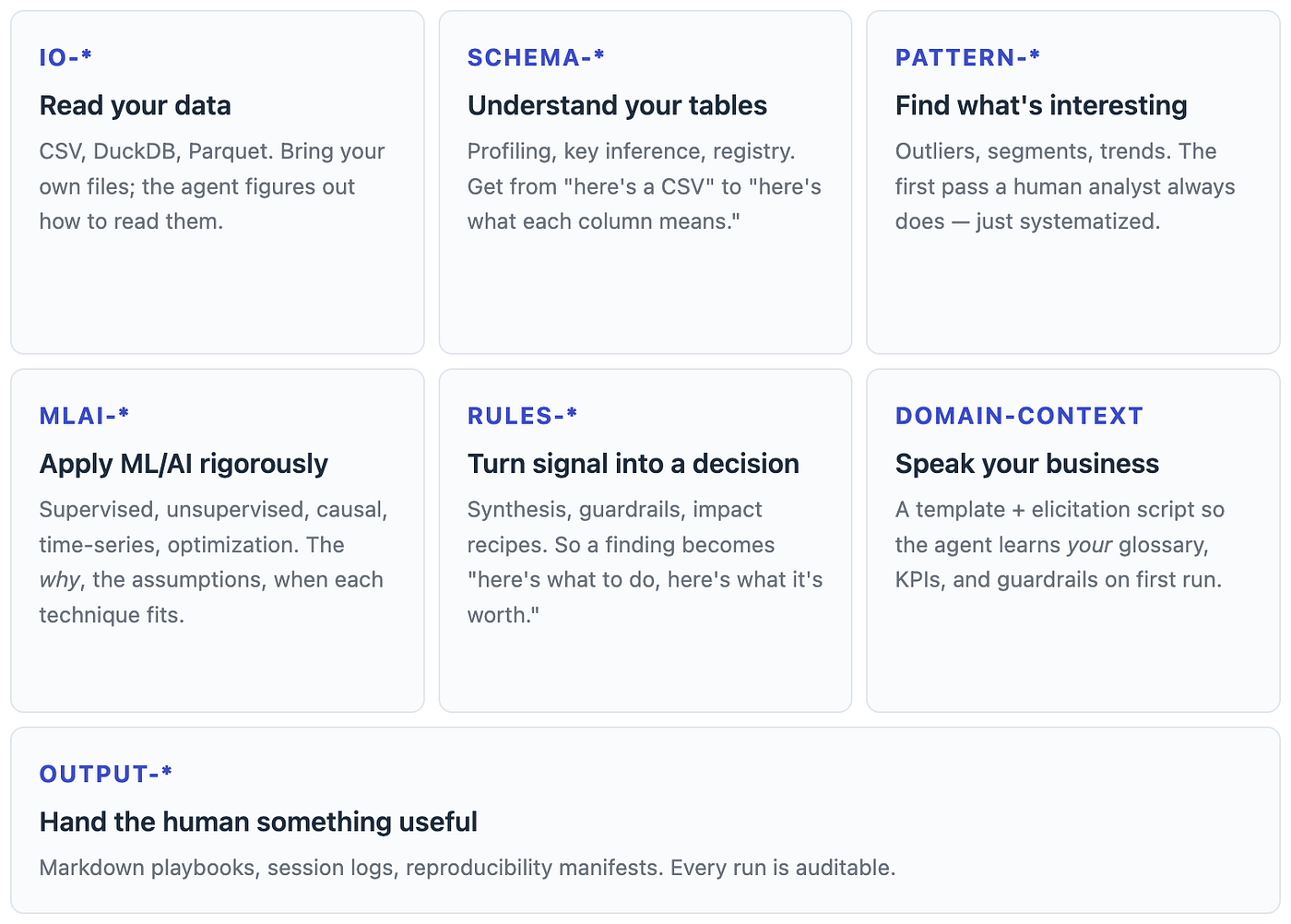
The list is meant to grow. If you want to add a skill for design, finance, supply chain, or anything else, the format is the same. Once it’s in the folder, every agent that comes after can use it.
Meet the agents
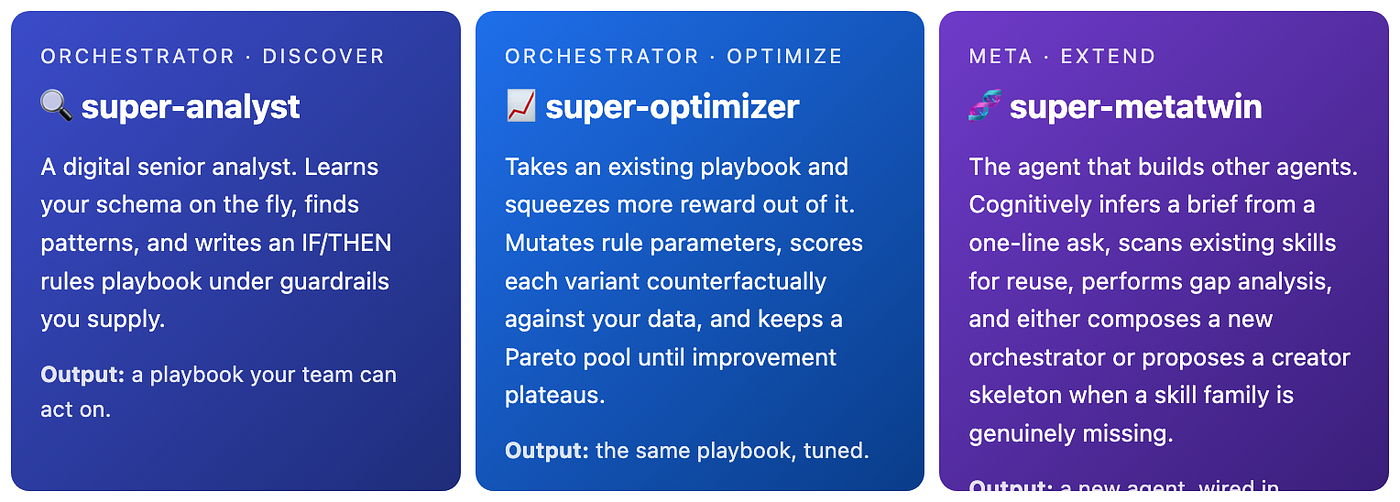
Skills are the building blocks. Agents are what compose them into something a person actually uses. There are three agents in the pack today, and they’re meant to be used in sequence: one discovers rules, one tunes them, and one creates more agents when you need them.
How they fit together
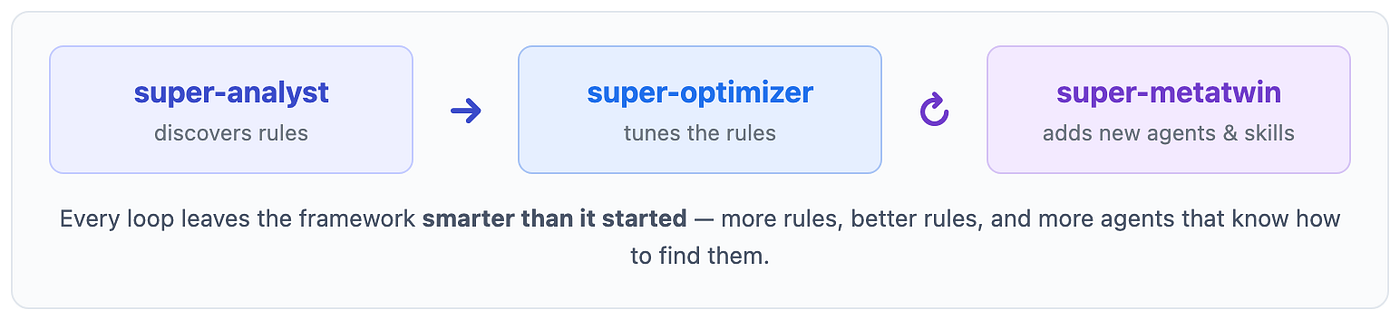
The loop is the point. super-analyst produces a playbook, super-optimizer tunes it, and when you need a new kind of agent for a new kind of problem, super-metatwin writes it for you instead of you starting from a blank file.
super-analyst — reads your data, finds patterns, and writes IF/THEN rules under guardrails you provide.
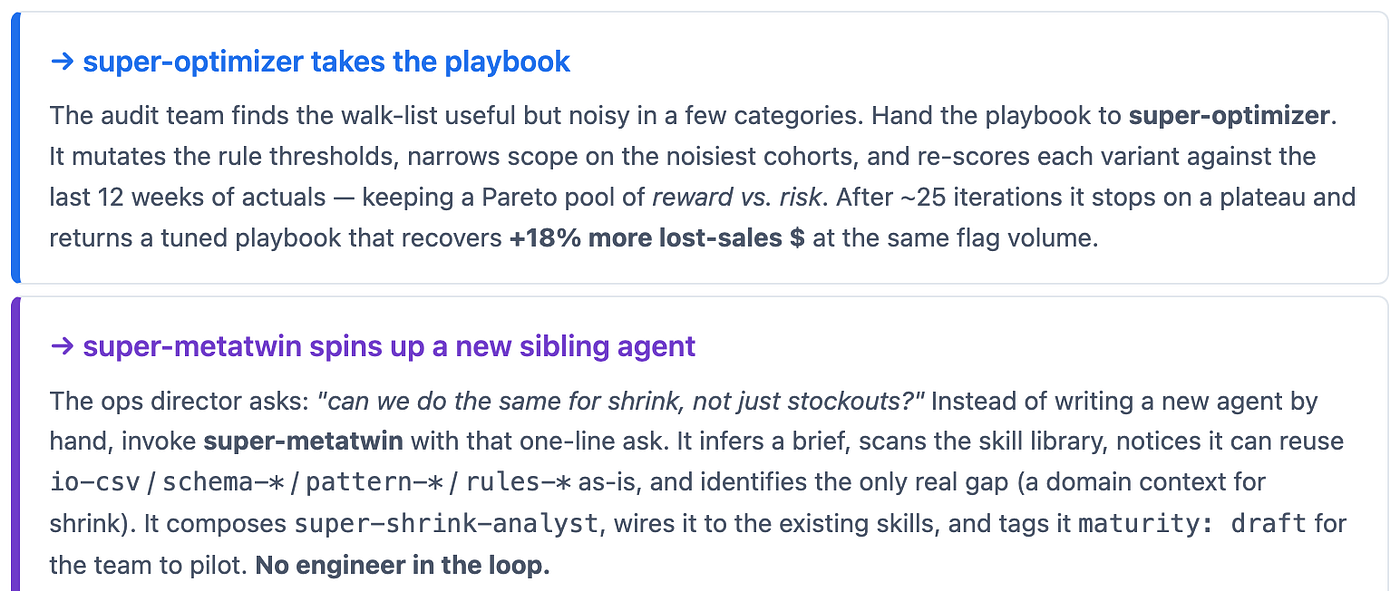
super-optimizer — takes a playbook and tunes its parameters by trying small variations and scoring each one against historical data. Stops when improvement levels off.
super-metatwin — given a short description of an agent you want, it checks what’s already in the skill library, identifies what’s missing, and writes the new agent (or, when a whole new skill family is needed, a skeleton for a human to fill in).
A worked example: silent stockouts
To make this concrete, here’s a scenario. You operate a nationwide chain of stores. Inventory says each SKU has stock on the shelf, and the point-of-sale feed says what sold each day. Both look healthy in the usual dashboards. But somewhere in the long tail, certain SKUs are showing positive on-hand and zero sales for weeks at a time. That’s a phantom inventory problem — the system thinks the product is there, customers can’t actually find it. A senior ops analyst would eventually catch it. Here’s how super-analyst would.
Skills it pulls together
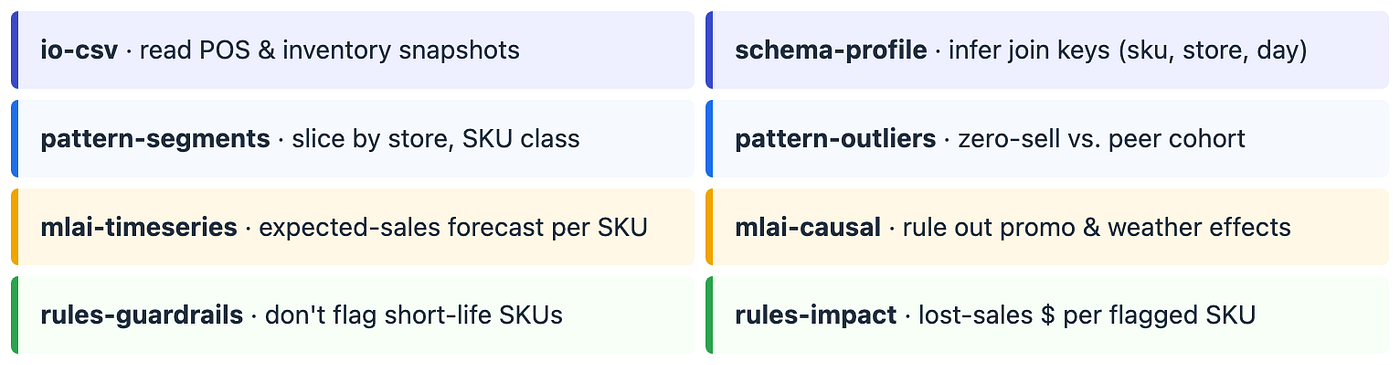
What it does, step by step
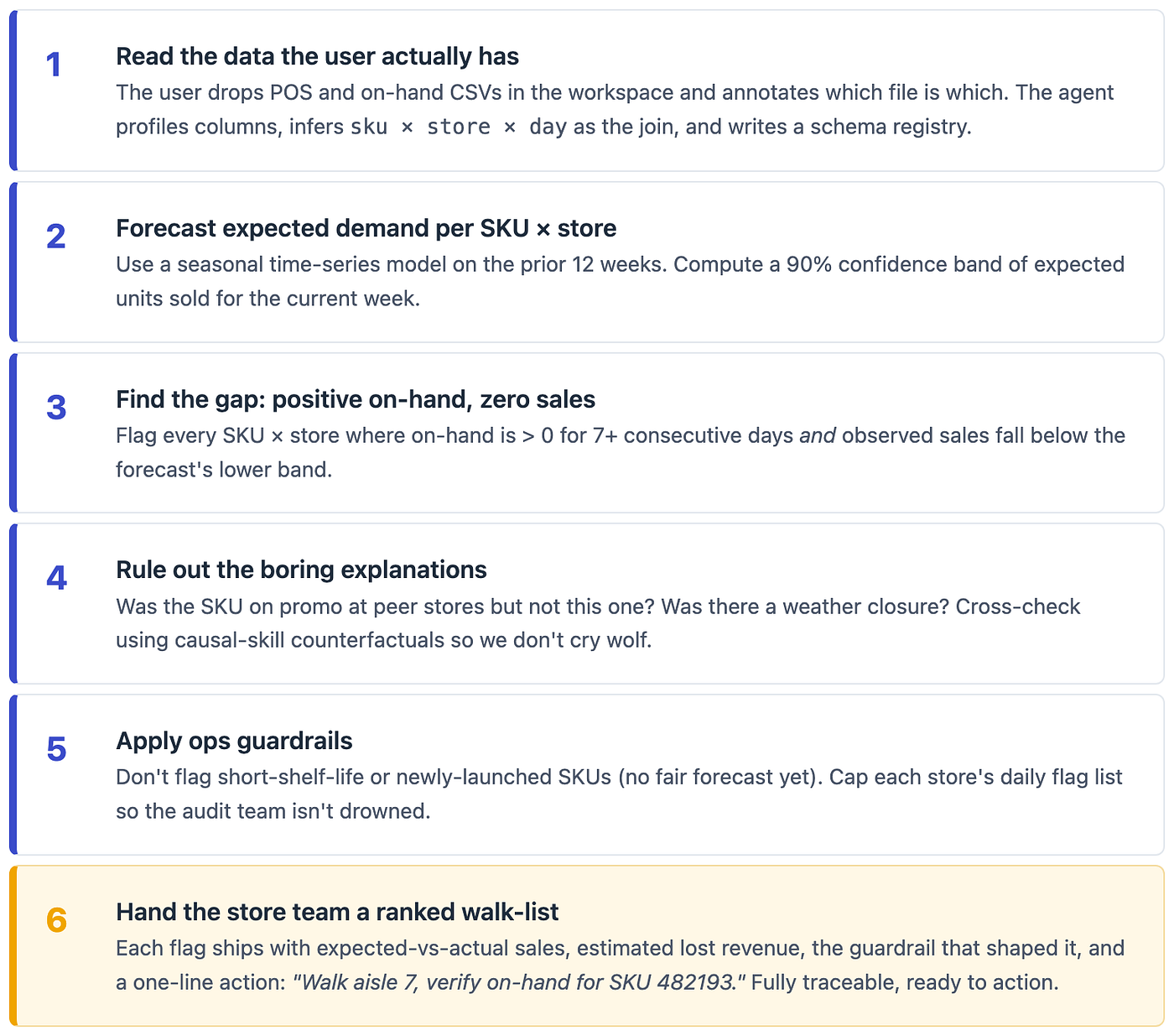
That kind of analysis would normally pull in a few people from different teams to build as a one-off. Once it’s wrapped up as an agent, it just runs on a schedule against every store and every SKU. The logic doesn’t change; the scope does.
Week two: bring in the other two agents
Once a playbook exists, the other two agents have something to work with. Here’s a realistic next step for the same example.
Why this matters
Every skill someone writes is something the next person doesn’t have to figure out. And with super-metatwin in the pack, the framework can extend itself — you can ask for a new agent and get a working draft back, instead of starting from scratch every time.
Open source on GitHub — github.com/careychou/super_teammate